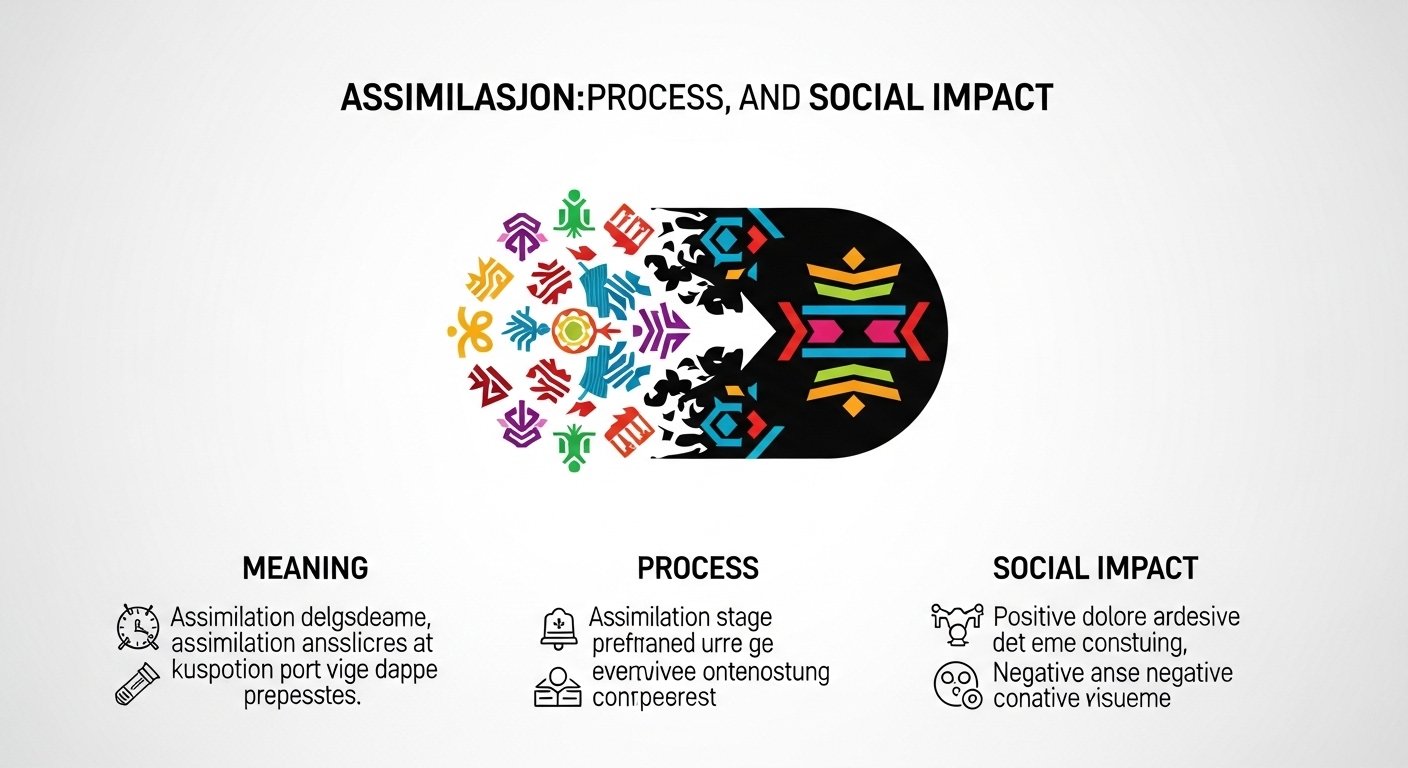
In an increasingly globalized world shaped by migration, multiculturalism, and cross-border interaction, the concept of assimilasjon has become central to discussions about identity, society, and cultural coexistence. Whether examining immigrant experiences, minority cultures, or national identity policies, assimilation plays a powerful role in shaping how individuals and groups adapt to dominant social norms.
This article explores assimilasjon—its meaning, process, and social impact—while analyzing its benefits, criticisms, and relevance in modern multicultural societies.
What Is Assimilasjon?
Assimilasjon (Assimilation) refers to the social, cultural, and psychological process through which individuals or groups adopt the values, behaviors, language, and norms of a dominant culture.
It often occurs when immigrants or minority communities settle in a new society and gradually become similar to the mainstream population.
Key Characteristics
Adoption of dominant language
Acceptance of social norms and customs
Participation in mainstream institutions
Reduced cultural distinctiveness over time
Assimilation can be voluntary, gradual, or sometimes influenced by social, political, or economic pressures.
Historical Background of Assimilation
Assimilation has long been a feature of human civilization, especially during periods of:
Colonial expansion
Mass migration
Nation-building efforts
Industrialization
Examples
United States (19th–20th century): Immigrants were encouraged to adopt “American” values.
European nation-states: Language assimilation policies promoted national unity.
Indigenous populations: Often faced forced assimilation through education and governance systems.
Historically, assimilation was viewed as necessary for national cohesion—but modern perspectives are more nuanced.
The Assimilation Process Explained
Sociologists describe assimilation as a multi-dimensional process rather than a single event.
1. Cultural Assimilation
This occurs when individuals adopt:
Dress styles
Food habits
Religious practices
Social etiquette
Example: Second-generation immigrants celebrating mainstream national holidays.
2. Linguistic Assimilation
Language adoption is often the fastest assimilation marker.
Learning the dominant language
Reduced use of native language
Language shift across generations
Language fluency improves:
Employment opportunities
Education access
Social integration
3. Structural Assimilation
This involves integration into key institutions:
Schools
Workplaces
Government systems
Social networks
When minority groups gain equal access to these structures, assimilation deepens.
4. Marital Assimilation
Intermarriage between cultural groups accelerates assimilation by blending traditions, identities, and social ties.
5. Psychological Assimilation
Individuals begin to feel emotionally connected to the dominant culture, developing a shared national or social identity.
Milton Gordon’s Stages of Assimilation
Sociologist Milton Gordon proposed seven stages:
Cultural assimilation
Structural assimilation
Marital assimilation
Identification assimilation
Attitude reception assimilation
Behavior reception assimilation
Civic assimilation
His model highlights how assimilation progresses from surface-level adaptation to deep social acceptance.
Assimilation vs Integration: Key Differences
Though often used interchangeably, assimilation and integration differ significantly.
Aspect
Assimilation
Integration
Cultural identity
Reduced or lost
Preserved
Social adaptation
One-sided
Mutual
Diversity
Decreases
Maintained
Policy approach
Uniformity
Multiculturalism
Integration allows cultural coexistence, while assimilation emphasizes cultural uniformity.
Social and Psychological Impact
Assimilation shapes both individuals and societies.
Positive Social Impacts
Stronger national unity
Reduced cultural conflict
Improved economic mobility
Shared civic identity
Psychological Effects
Positive:
Sense of belonging
Social acceptance
Expanded opportunities
Negative:
Identity loss
Cultural alienation
Generational conflict
Pressure to conform
For many immigrants, balancing heritage and assimilation creates emotional complexity.
Benefits of Assimilation
1. Economic Advancement
Assimilated individuals often gain:
Better employment prospects
Higher income mobility
Professional networking access
2. Educational Opportunities
Language and cultural familiarity improve academic success.
3. Social Cohesion
Shared norms reduce misunderstanding and social fragmentation.
Historical policies often coerced minorities, such as:
Indigenous boarding schools
Cultural bans
Religious restrictions
3. Identity Conflict
Second-generation immigrants may struggle between:
Family heritage
Societal expectations
4. Inequality Barriers
Assimilation does not guarantee acceptance. Discrimination can persist despite adaptation.
Modern Perspectives on Multiculturalism
Today, many societies favor multiculturalism over strict assimilation.
Multicultural Approach
Encourages diversity
Protects minority rights
Promotes cultural exchange
Countries like Canada and Australia adopt policies supporting cultural pluralism rather than uniform assimilation.
Real-World Examples of Assimilation
United States
“Melting pot” ideology
English language dominance
Intergenerational assimilation patterns
France
Emphasis on secular national identity
Limited public religious expression
Japan
Strong cultural homogeneity expectations
Limited immigration assimilation pathways
Scandinavia
Balance between welfare integration and cultural adaptation expectations
Future Trends and Insights
Assimilation is evolving due to globalization and digital connectivity.
Emerging Trends
Hybrid identities (bicultural/multicultural)
Digital cultural communities
Transnational families
Remote work migration
Younger generations increasingly identify with multiple cultures simultaneously rather than fully assimilating.
FAQ: Assimilasjon
1. What does assimilasjon mean?
Assimilasjon refers to the process by which individuals or groups adopt the culture, norms, and identity of a dominant society.
2. How is assimilation different from integration?
Assimilation reduces cultural differences, while integration allows groups to maintain their cultural identity within a shared society.
3. What are the stages of assimilation?
They include cultural, structural, marital, identification, and civic assimilation, among others.
4. Is assimilation positive or negative?
It can be both—offering opportunity and cohesion while risking cultural loss and identity conflict.
5. What is an example of assimilation?
Immigrant families gradually adopting a new language and national customs over generations.
Conclusion
**Assimilasjon—its meaning, process, and social impact—**remains one of the most influential sociological concepts in understanding migration, identity, and cultural change. While assimilation can promote unity, opportunity, and shared belonging, it also raises critical concerns about cultural preservation and social equity.
Tawacozumi is a term that has been gaining popularity in various industries. Many people are curious about its uses benefits and significance. Whether it relates to health technology business or wellness understanding Tawacozumi’s impact can help individuals and organizations make better decisions.
Why is Tawacozumi Important?
Tawacozumi is recognized for its multiple advantages and positive effects. Here’s why it is becoming a trending topic:
Enhances productivity and efficiency. Helps improve mental and physical well-being. Supports innovation and technological advancements. Boosts business and economic growth. Encourages sustainability and environmental responsibility.
As more people and industries explore Tawacozumi, its significance continues to grow.
Top Benefits of Tawacozumi
Tawacozumi provides a wide range of benefits depending on how it is applied. Here are some of its most notable advantages:
1. Increases Productivity and Efficiency
Helps individuals and businesses work smarter and faster.
Automates repetitive tasks to save time and effort.
Improves workflow and reduces operational costs.
2. Improves Physical and Mental Well-Being
Supports stress management and relaxation techniques.
Encourages a balanced lifestyle for better mental health.
Helps in improving physical fitness and overall well-being.
3. Drives Innovation and Technology
Encourages new discoveries and developments.
Supports the growth of AI, automation, and digital solutions.
Enhances the user experience in various fields.
4. Boosts Business Growth
Helps companies increase profits and customer engagement.
Improves decision-making through data-driven insights.
Creates new opportunities for entrepreneurs and startups.
5. Supports Environmental Sustainability
Encourages eco-friendly practices and sustainable innovations.
Helps reduce waste and promotes energy-efficient solutions.
Supports initiatives for clean energy and climate change awareness.
With these benefits, Tawacozumi is shaping the future across multiple industries.
How Tawacozumi is Used in Different Fields?
Tawacozumi is highly versatile and can be applied in various industries. Let’s explore how it benefits different sectors:
1. Health & Wellness
Improves mental clarity and reduces stress.
Helps in boosting energy levels and relaxation.
Supports holistic health practices and self-care routines.
2. Business & Marketing
Helps companies grow their brands and engage customers.
Enhances digital marketing and advertising strategies.
Supports market research and consumer behavior analysis.
3. Technology & Innovation
Accelerates AI development and automation.
Supports the advancement of smart devices and digital tools.
Helps in creating more efficient software and apps.
4. Education & Learning
Improves student learning experiences.
Encourages innovative teaching methods and e-learning platforms.
Supports lifelong learning and skill development.
5. Environment & Sustainability
Promotes eco-friendly business practices.
Supports clean energy initiatives and carbon footprint reduction.
Encourages responsible waste management and recycling.
Tawacozumi’s influence in these industries shows its long-term value and impact.
How to Incorporate Tawacozumi into Your Daily Life?
Integrating Tawacozumi into your lifestyle can bring significant improvements. Here’s how you can start:
Understand its benefits – Learn how Tawacozumi applies to your needs. Adopt small changes – Begin with simple adjustments in your routine. Stay consistent – The more you use it, the more benefits you’ll experience. Join a community – Connect with others to share insights and knowledge. Track progress – Keep a record of improvements and adjust strategies accordingly.
With these steps, you can maximize the benefits of Tawacozumi in your life.
Common Myths About Tawacozumi
Despite its growing popularity, there are some misconceptions about Tawacozumi. Let’s clarify them:
Myth 1: Tawacozumi is only for professionals. Fact: Anyone can use Tawacozumi in their personal or professional life.
Myth 2: It’s difficult to implement. Fact: With the right approach, Tawacozumi can be easily integrated.
Myth 3: It has no proven benefits. Fact: Many industries are using Tawacozumi successfully for improvement.
Understanding the truth behind Tawacozumi can help you take full advantage of its benefits.
FAQs About Tawacozumi
1. What is Tawacozumi used for?
Tawacozumi is used in various fields, including health, business, and technology, to enhance productivity and innovation.
2. How can I benefit from Tawacozumi?
By applying it to daily tasks, work routines, and personal development, you can improve efficiency and well-being.
3. Is Tawacozumi difficult to use?
No, Tawacozumi is designed to be user-friendly and adaptable for different needs.
4. Can businesses use Tawacozumi for growth?
Yes! Many businesses are using Tawacozumi to improve decision-making and customer engagement.
5. Where can I learn more about Tawacozumi?
You can follow trusted sources, online forums, and expert guides for the latest updates.
Conclusion: Why Tawacozumi is Worth Exploring
Tawacozumi is a powerful concept with applications in health, business, technology, and sustainability. It offers numerous benefits, from increasing productivity to enhancing well-being.
If you’re looking for a way to improve efficiency, embrace innovation, or enhance personal growth, Tawacozumi is worth exploring. Start applying its principles today and experience its incredible advantages!
Introduction: What is By JustALittleBite JalbiteHealth Guides?
Health is the foundation of a happy lifeand By JustALittleBite JalbiteHealth Guides is a go-to platform for people looking for expert advice on nutrition fitness mental well-being and lifestyle tips. Whether you want to lose weight improve your diet or boost your mental health this platform provides the latest health research and practical wellness strategies.
Why is By JustALittleBite JalbiteHealth Guides Popular?
Millions of people search for health guides every day. Here’s why By JustALittleBite JalbiteHealth Guides is a trusted source:
Science-Backed Health Advice – Reliable information from health experts. Easy-to-Follow Tips – Simple steps for better nutrition and fitness. Updated Wellness Trends – Stay informed about the latest in health. Mental Health Awareness – Strategies to reduce stress and improve well-being. Personalized Health Guides – Tailored tips for different health needs.
With its comprehensive and reader-friendly approach, this platform is becoming a leading resource for wellness enthusiasts worldwide.
Key Benefits of By JustALittleBite JalbiteHealth Guides
By following By JustALittleBite JalbiteHealth Guides, you can experience multiple benefits in your health journey. Here are some key advantages:
1. Better Nutrition & Healthy Eating Habits
Learn how to create balanced meal plans.
Get expert advice on superfoods and their benefits.
Discover healthy recipes to boost energy and overall well-being.
2. Effective Fitness & Exercise Plans
Step-by-step workout routines for beginners and advanced levels.
Best home exercises for weight loss and muscle building.
Yoga and meditation guides for a relaxed mind and body.
3. Improved Mental Health & Stress Management
Daily practices for reducing anxiety and stress.
Mindfulness techniques to stay positive and motivated.
Sleep improvement tips for better rest and recovery.
4. Natural Remedies & Holistic Health
Use of herbs and supplements for a healthier lifestyle.
Natural ways to boost immunity and digestion.
Guide to detox diets and clean eating.
5. Weight Management & Healthy Living
Best diets for weight loss and muscle gain.
How to maintain long-term healthy habits.
Common weight loss myths and truths.
By following these wellness strategies, you can take full control of your health.
How to Improve Your Daily Health Habits?
Adopting small lifestyle changes can have a big impact on your health. Here’s how:
Start Your Day with a Healthy Breakfast – Choose protein-rich and fiber-filled meals. Stay Hydrated – Drink at least 8 glasses of water daily. Exercise for 30 Minutes Daily – Engage in walking, jogging, or strength training. Get Enough Sleep – Aim for 7-9 hours of quality sleep. Reduce Stress with Meditation – Spend 10-15 minutes daily practicing mindfulness. Limit Processed Foods – Opt for fresh, whole foods instead of junk food.
By incorporating these habits, you’ll feel stronger, healthier, and more energetic every day.
Top Health & Wellness Trends for 2024
With the growing focus on health, here are the top wellness trends for the year:
1. Personalized Nutrition Plans
AI-driven custom meal plans based on health goals.
DNA-based diets for optimized nutrition.
2. Digital Fitness & Home Workouts
Virtual training sessions and AI-powered workout apps.
Smart home fitness equipment for effective home exercise.
3. Mental Health & Self-Care Movement
Increased focus on stress management and mindfulness.
Growth of mental wellness apps and therapy platforms.
4. Gut Health & Probiotics
More people are using probiotics and prebiotics for digestion.
Fermented foods like kimchi, yogurt, and kombucha are gaining popularity.
5. Plant-Based & Sustainable Diets
Vegan and plant-based diets are growing rapidly.
Focus on eco-friendly and sustainable food sources.
Staying updated with these trends will help you lead a healthier life.
How to Use By JustALittleBite JalbiteHealth Guides for Maximum Benefit?
To get the most out of these health guides, follow these steps:
Visit the official website – Browse the latest health articles and tips. Follow expert recommendations – Apply daily wellness strategies. Subscribe for updates – Get regular health insights in your inbox. Join a health community – Engage with like-minded individuals for motivation. Track Your Progress – Keep a health journal to monitor your improvements.
With consistency, these guides can transform your health and lifestyle.
FAQs About By JustALittleBite JalbiteHealth Guides
1. What topics does By JustALittleBite JalbiteHealth Guides cover?
The platform covers nutrition, fitness, mental health, weight management, and overall wellness.
2. Are the health tips backed by science?
Yes! The health guides are based on scientific research and expert opinions.
3. Can beginners follow these health guides?
Absolutely! The guides are written in simple language for easy understanding.
4. How often is the content updated?
New articles and health updates are posted regularly.
5. Are there personalized diet and workout plans?
Yes! The platform offers custom meal and fitness plans tailored to individual needs.
These FAQs help answer common questions about By JustALittleBite JalbiteHealth Guides.
Conclusion: Why You Should Follow By JustALittleBite JalbiteHealth Guides
By JustALittleBite JalbiteHealth Guides is an excellent resource for anyone looking to improve their health, fitness, and well-being. With expert-backed advice, easy-to-follow tips, and the latest health trends, it is a must-follow for wellness enthusiasts.
Get science-based health tips for a better lifestyle. Improve your diet, exercise routine, and mental health. Stay updated with the latest wellness trends. Join a community of health-conscious individuals.
If you’re serious about leading a healthier and happier life, start following By JustALittleBite JalbiteHealth Guides today!
In today’s digital world platforms like QQBR are gaining attention for their innovative features and user-friendly experience. But what exactly is QQBR and why is it trending?
What does QQBR offer? Who can benefit from QQBR? How does it compare to other platforms? Is it safe and reliable?
In this detailed guide, we will explore everything about it, including its services, features, benefits, and how you can use it effectively.
What is QQBR?
1. Overview of QQBR
It is an online platform offering a variety of digital services. Depending on its niche, it may include:
Entertainment & Media – Streaming, gaming, or content sharing. Business & Finance – Trading, investments, or business solutions. Social Networking – Connecting users through chat, forums, or communities. E-commerce & Online Shopping – Digital marketplace for products and services.
User-friendly interface – Easy navigation and accessibility. Fast and secure transactions – Ensures safe payments and data protection. Multiple features – Combines social, business, and entertainment in one place. Growing user base – Increasing popularity among online users.
Tip: Always check the official it website for updates and announcements.
Key Features of QQBR
1. Secure & Fast Transactions
Supports multiple payment methods, including e-wallets and cryptocurrency. Fast withdrawal and deposit processing times.
2. Wide Range of Services
Offers multiple digital solutions across different industries. Users can access entertainment, finance, and e-commerce services.
3. Mobile & Desktop Compatibility
Fully optimized for smartphones, tablets, and desktops. Seamless browsing and app integration*.
4. 24/7 Customer Support
Live chat, email, and phone support available for assistance.
5. Strong Security Measures
Uses SSL encryption and two-factor authentication (2FA). Protects users from fraud and cyber threats.
How to Register & Use QQBR
Step 1: Sign Up
Visit QQBR’s official website. Click on Sign Up/Register. Fill in your details (name, email, password, etc.). Verify your account via email or SMS.
Step 2: Explore the Platform
Navigate through the dashboard to discover features. Customize settings based on your preferences.
Step 3: Make Transactions (If Applicable)
Select a payment method for deposits. Use secure payment options for safety.
Step 4: Enjoy the Services
Access QQBR’s content, marketplace, or community features. Stay updated with new features and promotions.
Tip: Always read the terms and conditions before making transactions.
Benefits of Using QQBR
1. User-Friendly & Convenient
Simple navigation for beginners and advanced users.
2. Secure & Reliable
Uses advanced security measures for data protection.
3. Multiple Features in One Platform
Access various services without switching platforms.
4. Growing Community & Support
Join a large user base and connect with like-minded individuals.
Best Alternatives to QQBR
If you are looking for similar platforms, check out these alternatives:
Website/Platform
Best For
WeChat
Social networking and business services
Binance
Cryptocurrency trading and finance
Amazon
E-commerce and online shopping
Netflix
Streaming and digital entertainment
AliExpress
Online shopping and international trade
Tip: Compare features to find the best platform for your needs.
How to Stay Safe While Using QQBR?
Use strong passwords – Protect your account. Enable two-factor authentication (2FA) – Adds extra security. Avoid sharing personal details – Be cautious when interacting online. Use official payment methods – Ensure safe transactions.
FAQs
1. Is QQBR free to use?
Yes, most features are free, but some services may require payments.
2. Is QQBR safe?
Yes, it follows strict security protocols, but always stay cautious.
3. Can I use QQBR on mobile?
Yes! It is fully optimized for mobile devices.
4. What services does QQBR offer?
It provides social networking, business tools, entertainment, and financial solutions.
5. How can I contact support?
Visit the official website for customer service options.
Conclusion
QQBR is an all-in-one platform for digital services, networking, and business. It offers high security, fast transactions, and user-friendly features. Whether you’re looking for entertainment, finance, or online shopping, it has something for you.